Two Simulation Worlds, One Company: How QH Build Started
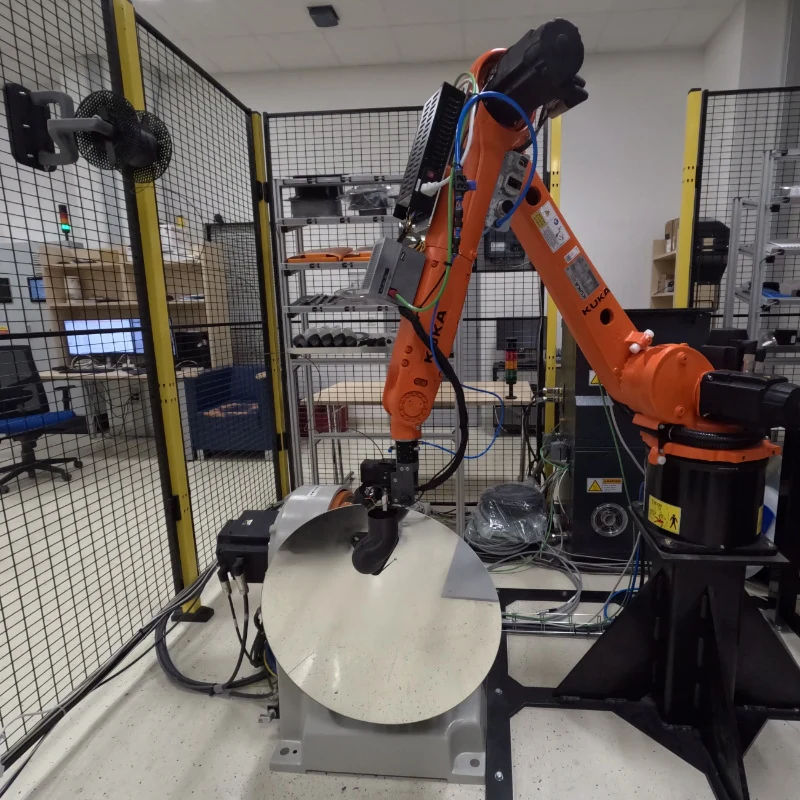
QH Build began where two engineering disciplines met: high-fidelity multiphysics and controller-aware industrial robotics. Each side could solve problems the other could not.
News & field notes
Three editorial collections—one clear view of the company journey, the platform and the evidence behind QH Build.
Browse by collection
Follow the company story, inspect the engineering stack, or go directly to measured validation evidence.
Collection 01
The people, failed prints and engineering decisions that shaped the company.
3 articles
QH Build began where two engineering disciplines met: high-fidelity multiphysics and controller-aware industrial robotics. Each side could solve problems the other could not.

Robot repeatability is only one link in a long chain from CAD to a physical part. Toolpaths, controllers, calibration, external axes and material behavior can turn a correct virtual plan into an incorrect build.

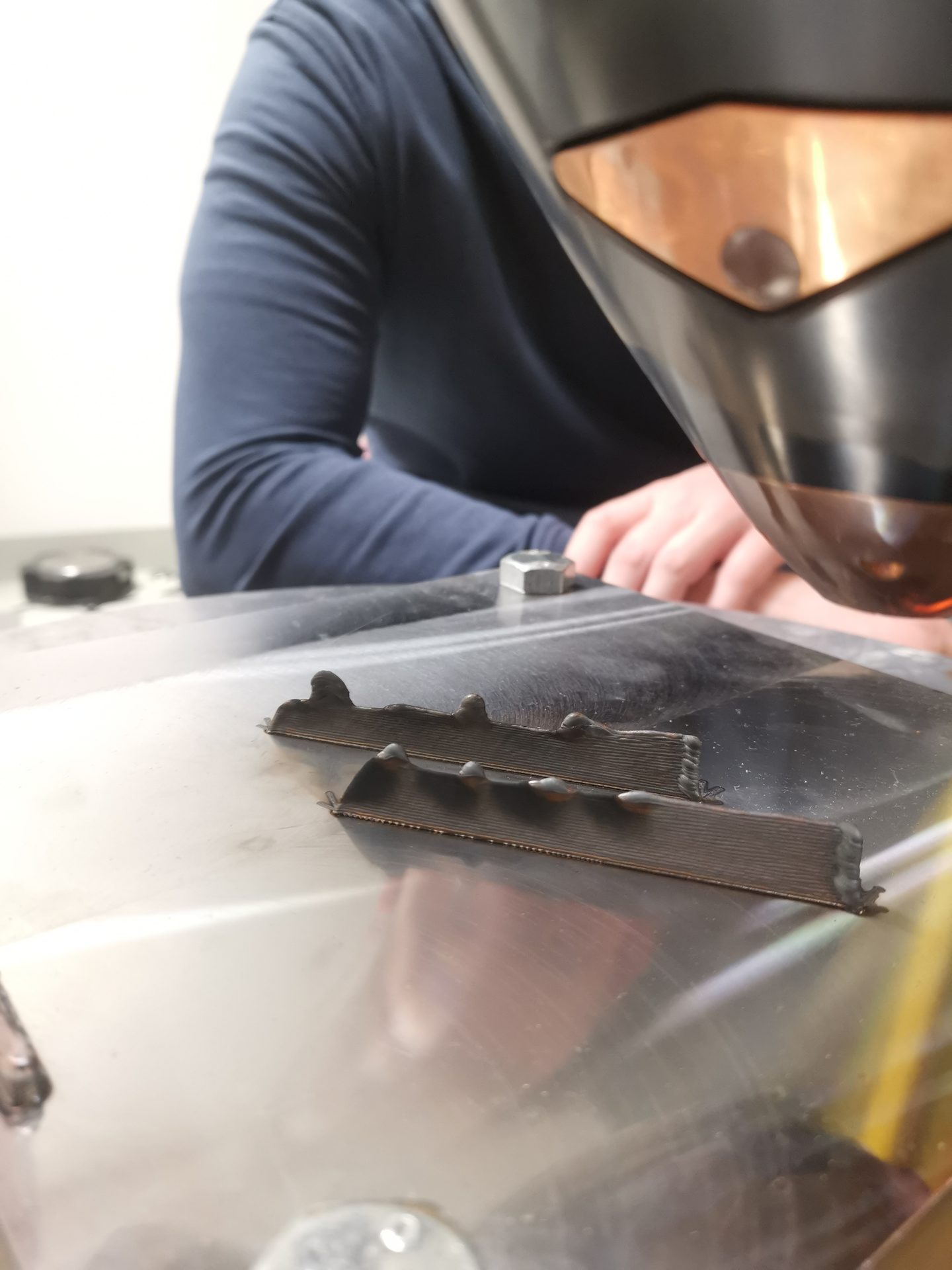
Our roadmap was shaped by overheated parts, disconnected simulations, parameter matrices and synchronized data logs. The failures made the architecture obvious.
Collection 02
Multiphysics, robotics and the software architecture connecting them.
3 articles

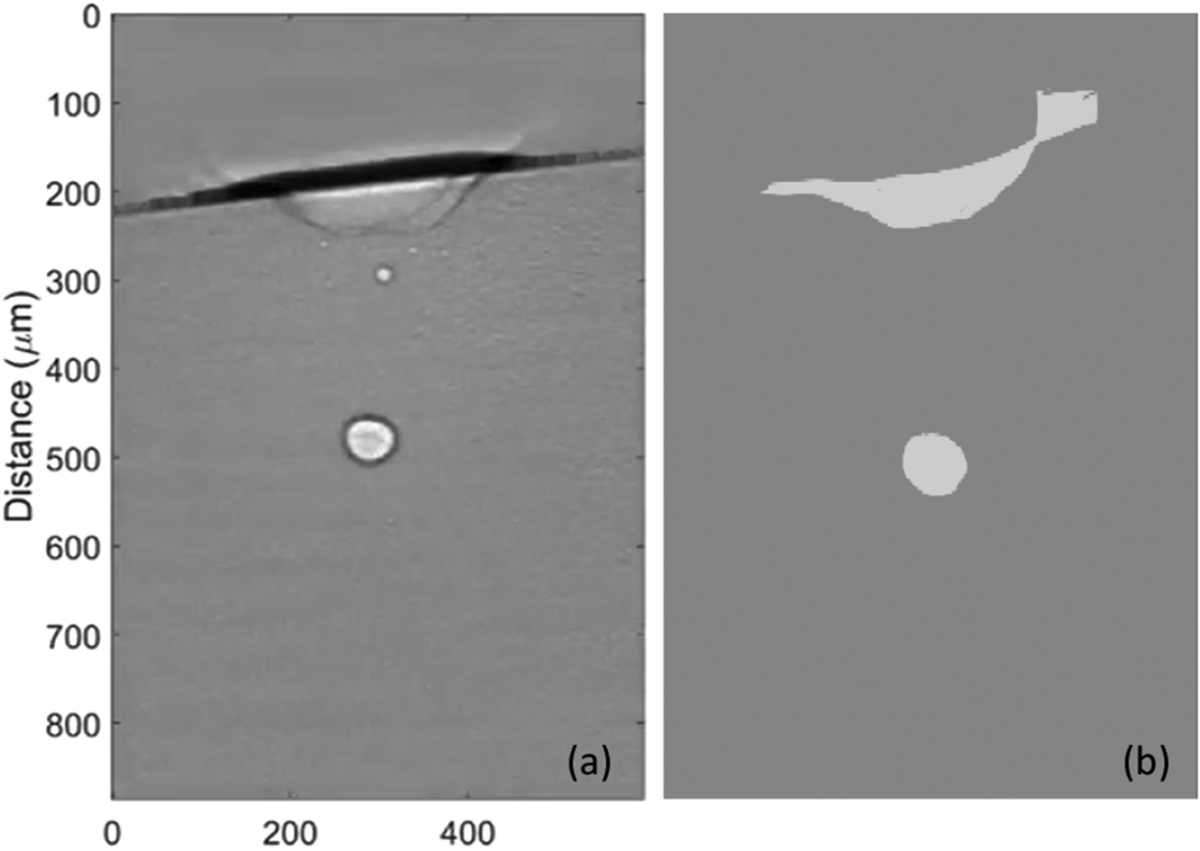
A metal additive process may look like a laser following a path. Under the surface, it is a rapidly changing system of optics, fluid flow, evaporation, surface tension, heat transfer and solidification.

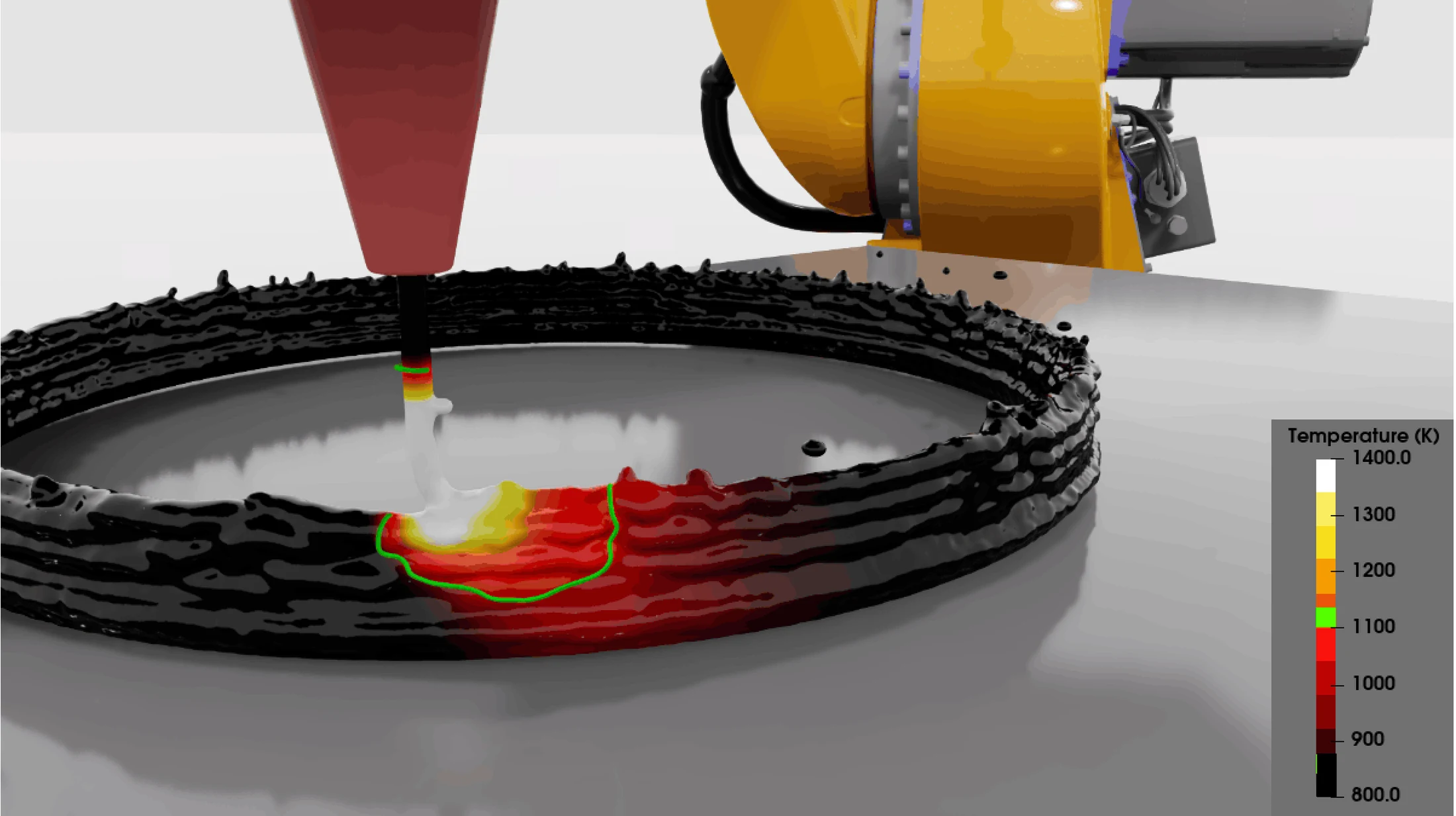
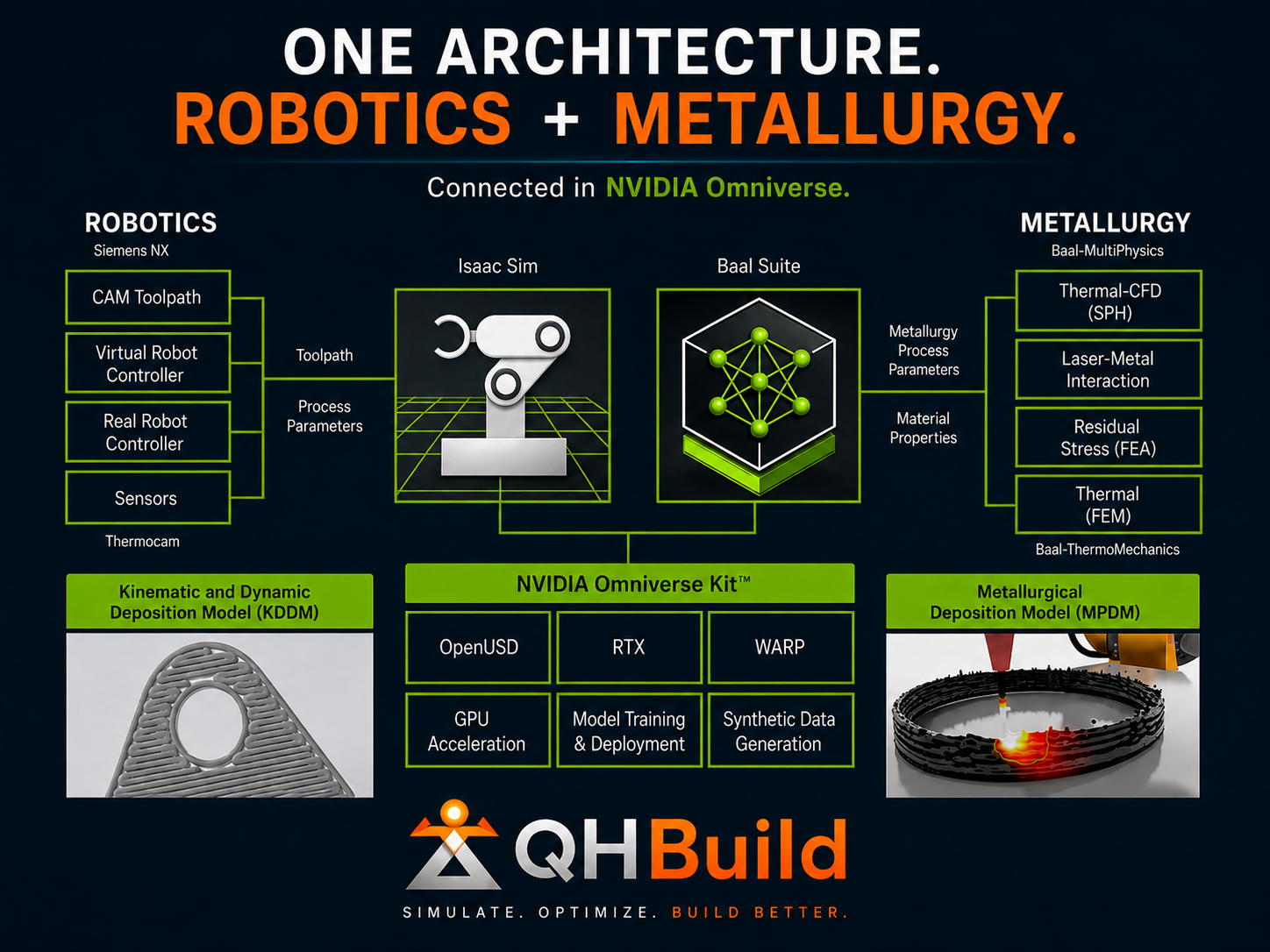
KDDM delivers fast controller-aware deposition prediction. MPDM resolves laser-material interaction, melt-pool dynamics and thermal behaviour. NVIDIA Omniverse connects them in one scene.

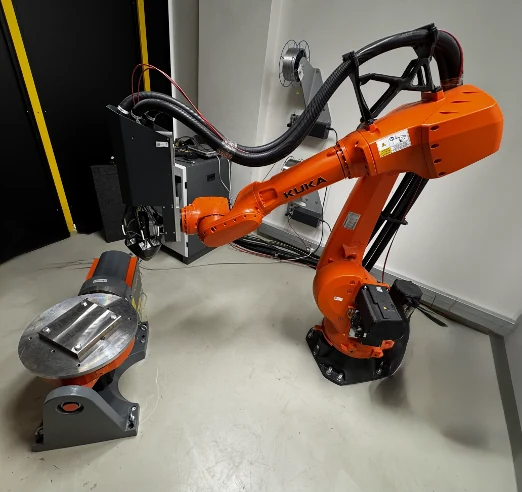
Our first production-oriented MVP is grounded in a real KUKA and Meltio wire-laser cell. The architecture is being built so the same simulation framework can expand to ABB robots, new laser heads and different multi-axis configurations.
Collection 03
Measured comparisons, material behaviour and clearly bounded solver claims.
4 articles
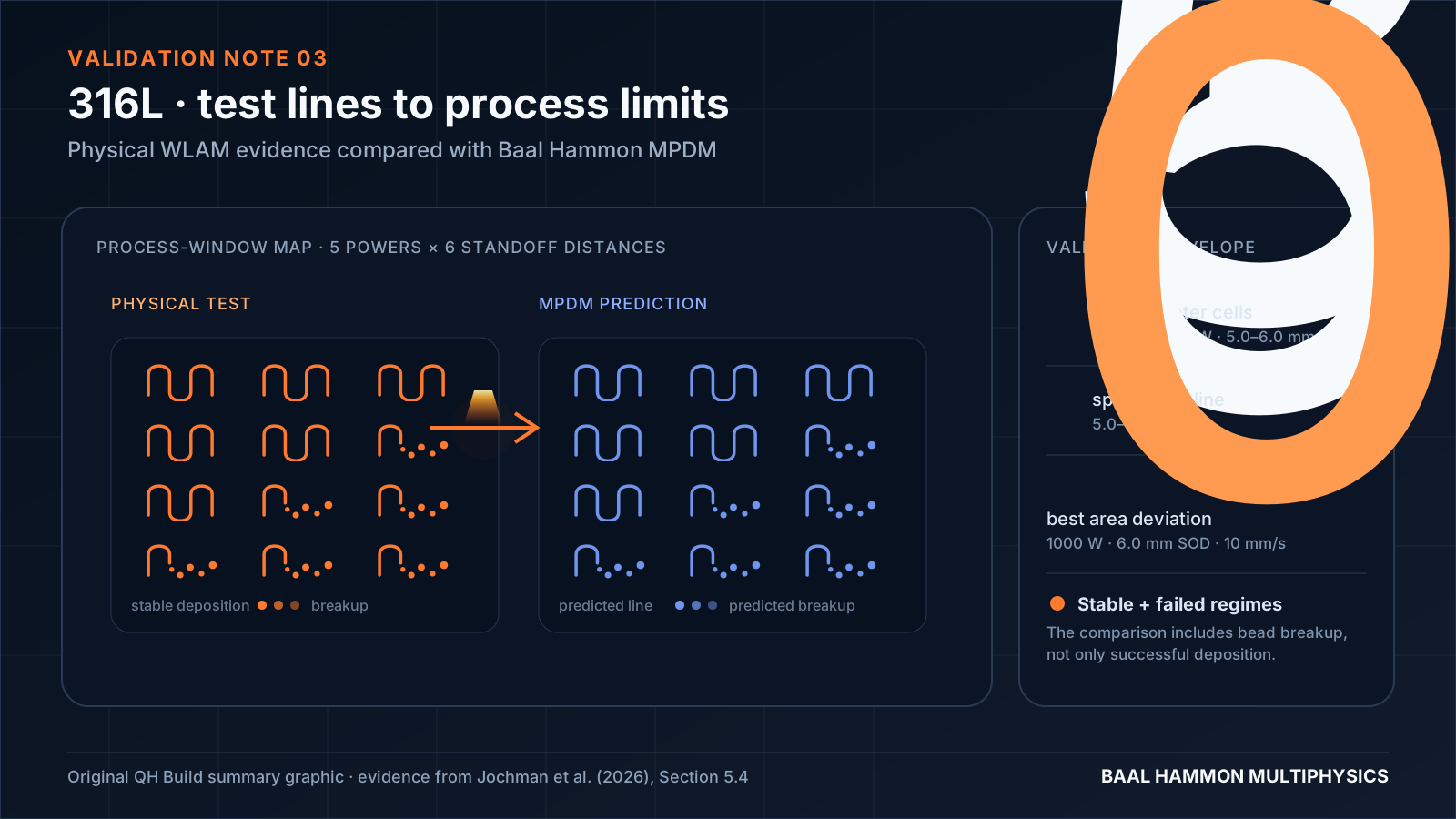
Thirty continuous 316L test lines probe power and standoff distance while five robot speeds challenge each line—testing whether Baal Hammon predicts both bead geometry and the onset of breakup.
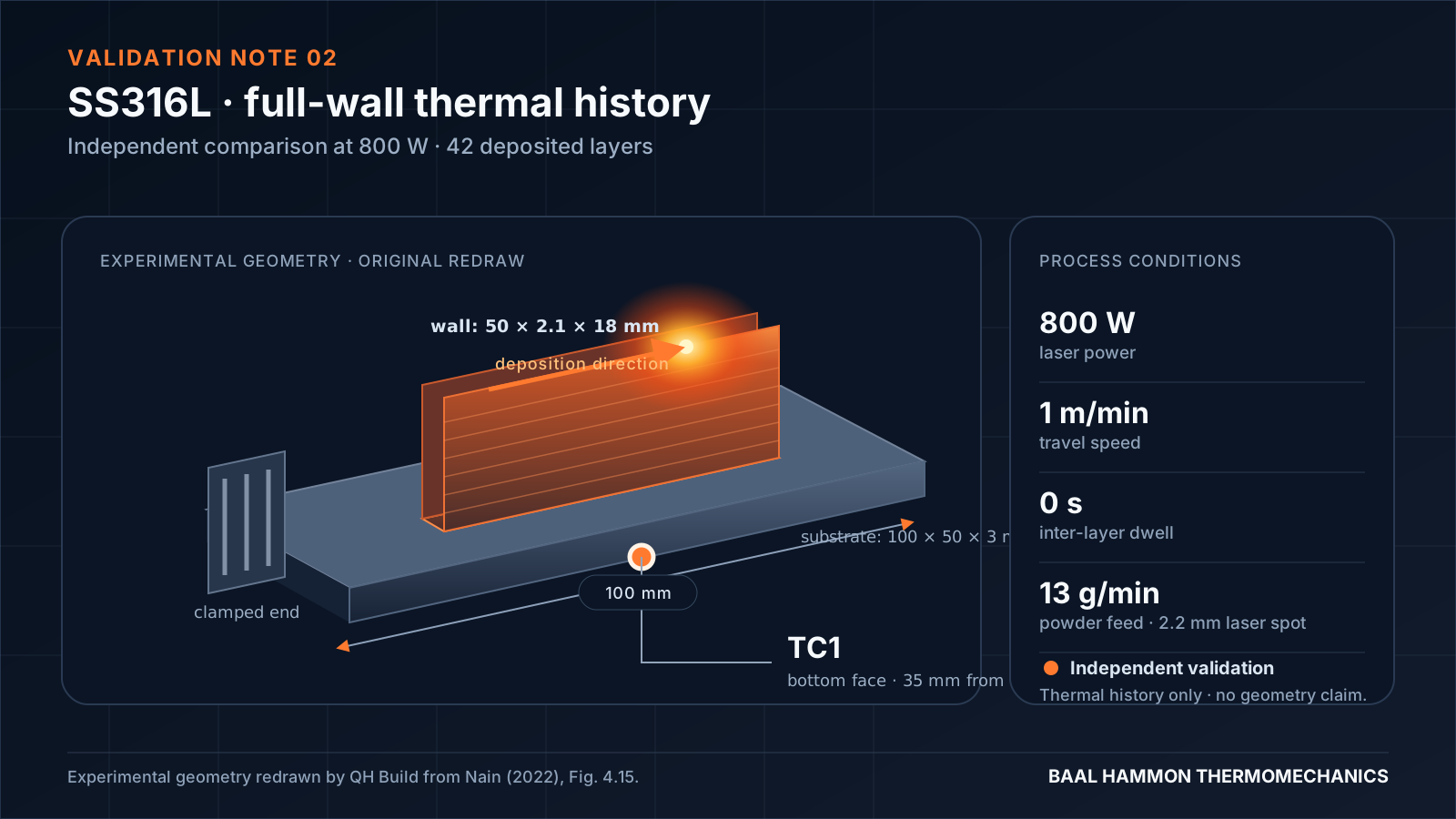
A 42-layer SS316L wall provides a second, materially different test of Baal Hammon Thermomechanics at 800 W, with a 7.92% peak-to-peak-normalized RMSE.
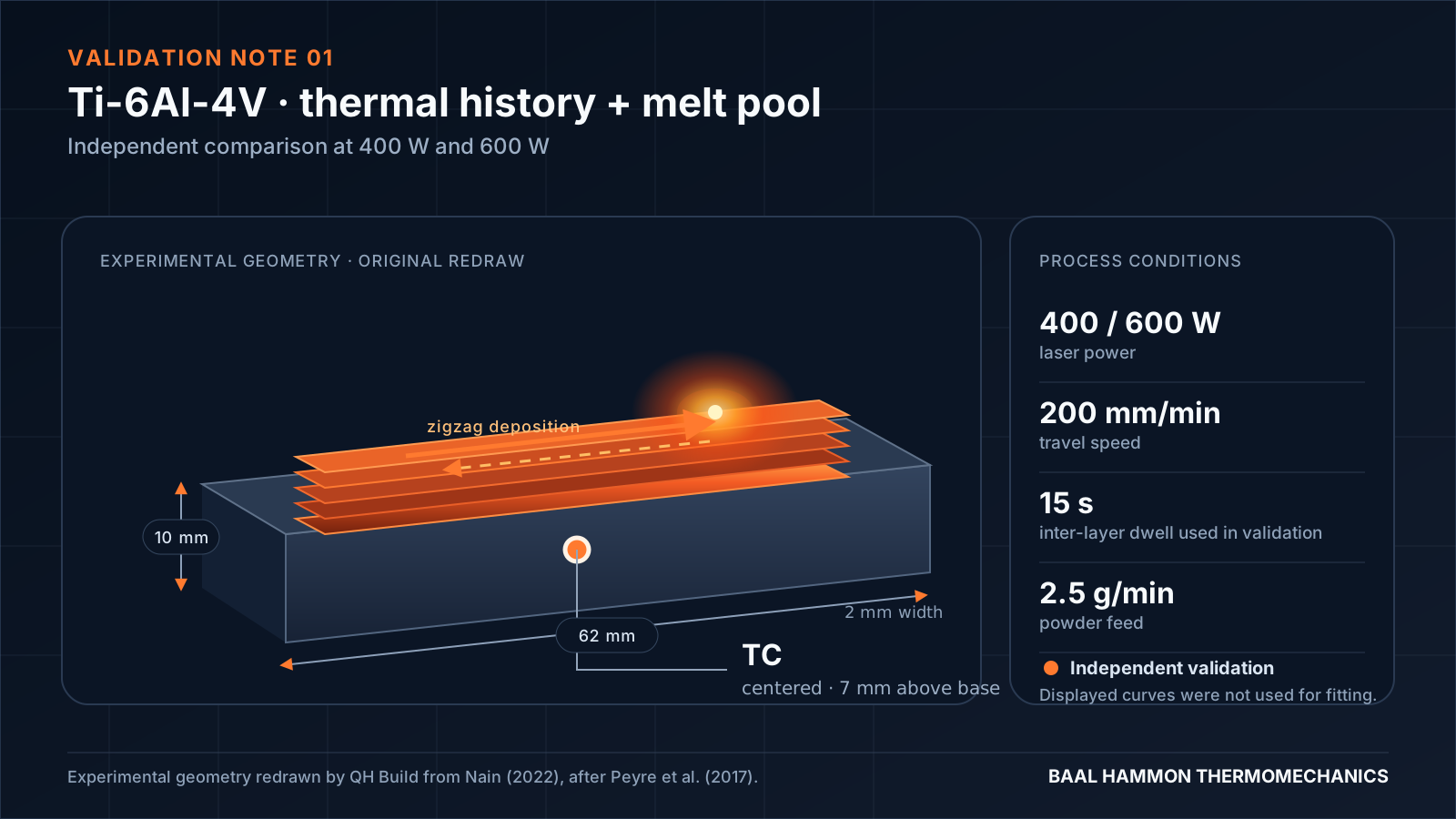
Baal Hammon Thermomechanics is tested against measured thermal histories and melt-pool dimensions at 400 W and 600 W—without fitting the displayed validation curves.

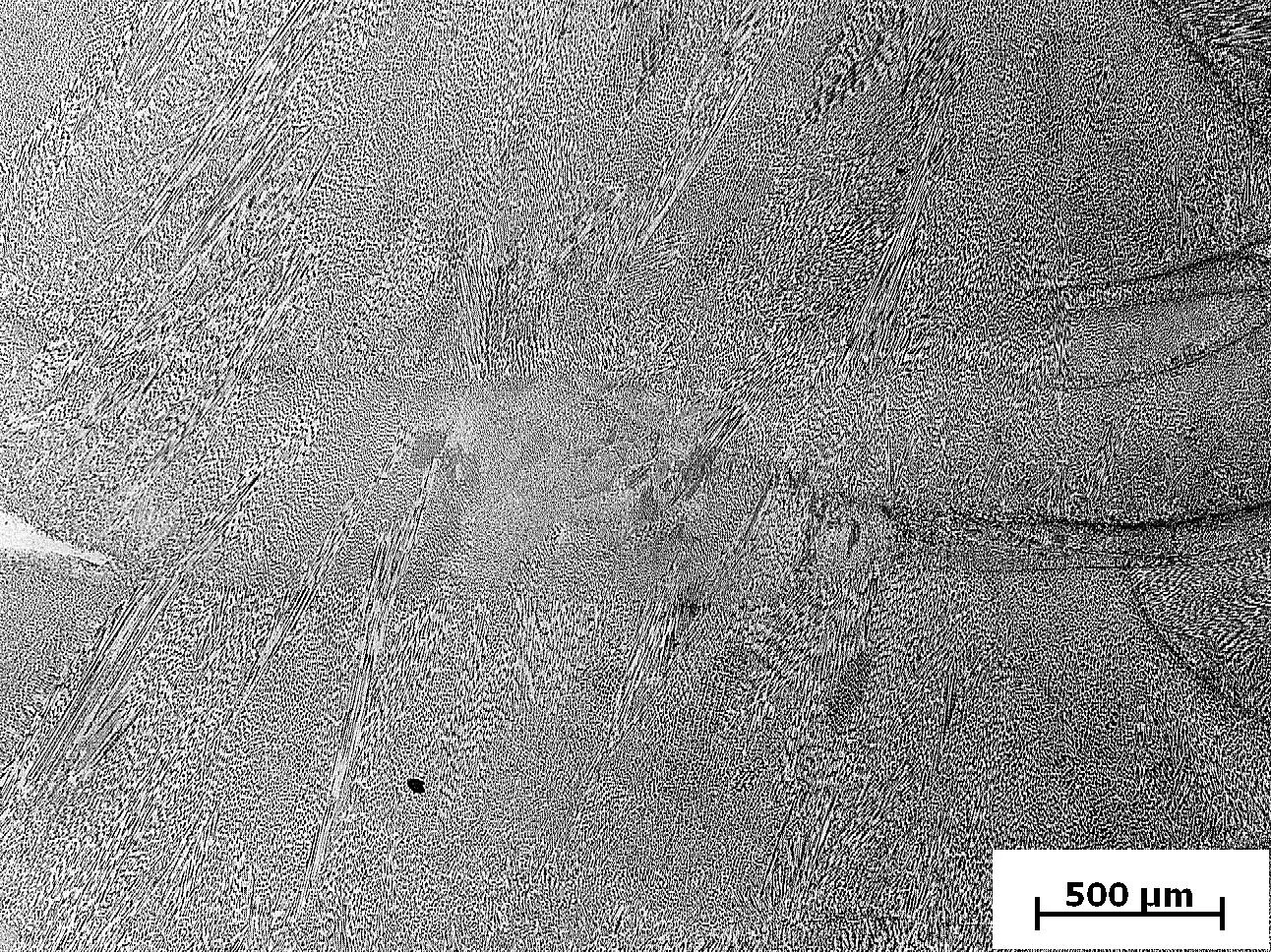
A dense, accurate part is only the beginning. Microscopy and mechanical testing reveal how thermal history creates directional structures and properties inside wire-based directed-energy-deposition builds.
Join the waitlist or talk with QH Build about robotic metal additive manufacturing, simulation and industrial deployment.